
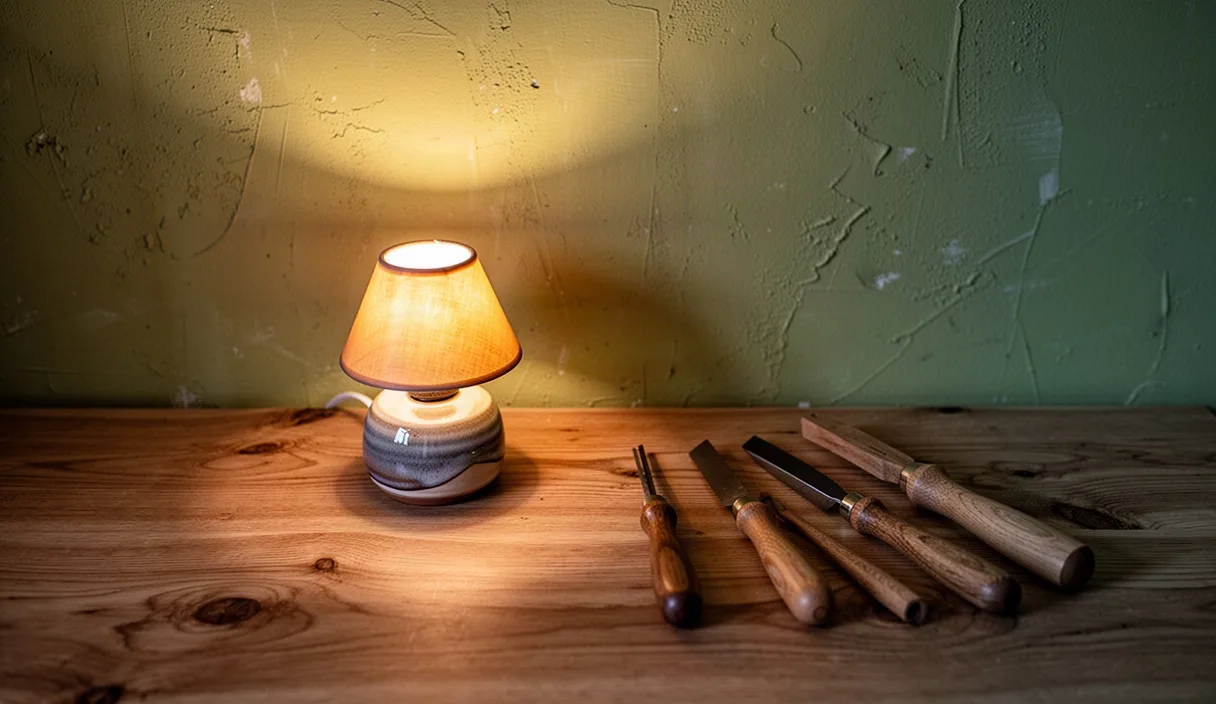
Every evening in our workshop, we end the day by sweeping the timber shavings off the bench and switching off the suspended fluorescent tubes that hang over the lathe. The sudden silence of the machines pairs with a change in the room that feels physical: the sharp, cold glare vanishes, replaced by the faint amber glow of a low-wattage desk lamp nestled in the corner. Our shoulders drop, our breathing slows, and our eyes cease the tight squinting demanded by micrometers and chisels. Light is not merely an aesthetic background; it is a direct input to human biology, as tangible to the nervous system as the grip of cold steel or the warmth of polished cherry wood.
Most modern living spaces carry the working daylight deep into the evening hours through bare drywall ceilings studded with recessed light cans. We live under artificial mid-day skies long after the sun has slipped below the tree line, wondering why our minds race when our heads finally touch the pillow. Setting up a deliberate low-light routine is a quiet act of domestic craft. By adjusting the placement, color temperature, and intensity of our evening illumination, we construct an environment that allows the nervous system to ease down toward restorative sleep.
Circadian Photoreceptors and Eye Chemistry
To understand why late-evening glare keeps us alert, we look first at the ocular tissue itself. Within the human retina lies a dedicated sub-population of cells known as intrinsically photosensitive retinal ganglion cells, or ipRGCs. Unlike the rods and cones that assemble fine detail and color vision for daytime navigation, ipRGCs monitor overall environmental brightness. These specialized cells express a photopigment called melanopsin, which reacts with acute sensitivity to short-wavelength light, specifically within the spectrum of 460 to 490 nanometers. When blue-tinted photons hit these cells, an electrical signal travels along the retinohypothalamic tract directly into the suprachiasmatic nucleus, the central clock of the brain.
This pathway dictates the synthesis and release of melatonin, an indolamine neurohormone produced by the pineal gland. Melatonin acts as an internal biological cue for sleep readiness, signaling peripheral tissues that nighttime has arrived. When melanopsin is stimulated by moderate to high levels of blue light, the enzymatic conversion of serotonin into melatonin stops almost completely. Research indicates that even an exposure of 40 to 80 lux of cool artificial illumination can suppress evening melatonin production by more than 40 percent within two hours. If you struggle with chronic sleep onset delays or shift-work disorders, consult a sleep physician or neurologist, as individual ocular sensitivity varies considerably.
The eye does not measure brightness in a vacuum; it reads the temporal pattern of your entire day. A morning spent outdoors under natural daylight, which regularly reaches 10,000 to 100,000 lux, establishes a robust circadian baseline. When we spend our mornings in dim indoor rooms and our nights under intense lighting, the ocular system loses its biological contrast. The goal of evening light control is not total darkness at seven in the evening, but rather a steep, deliberate drop in photic energy that matches the setting of the sun.
The Problem with High Overhead Luminescence
The spatial location of our light sources matters just as much as their color. The ipRGCs in the human retina are distributed unevenly; they show a higher density across the inferior retina, which corresponds to the lower half of the interior eye. Evolution shaped this architecture under the open sky: bright celestial light arrives from above, hitting the bottom of the eye to tell the organism that the sun is overhead and vigilance is required. Light arriving from below or at horizontal eye level strikes the superior retina, which has fewer melanopsin-bearing cells and triggers a weaker alertness signal.
Modern residential architecture works directly against this anatomical design. Standard building practices favor flush ceiling downlights, recessed pots, and high chandeliers that cast illumination straight down upon the crown of the head and into the lower retina. This overhead bath washes away the natural shadows of a room, creating a sterile visual field where every surface shares the same flat, clinical luminance. It fools the eye into behaving as if noon has returned, even when the clock reads ten at night.
When light originates from the floor, low shelves, or low tabletops, the physical geometry of your living space changes. Deep shadows form in the corners and along the ceilings, creating visual pockets of stillness. Surfaces soften: the weave of a linen cushion, the grain lines of an oak floor, and the rough surface of a cast-iron pot all reveal their texture when hit by low-angle light. This visual depth encourages the eyes to soften their focal accommodation, signaling to the autonomic nervous system that the active hours of scanning and vigilance are finished.
Choosing Lamps, Beeswax Candles, and Low Kelvin Bulbs
When selecting lighting hardware for the evening, we evaluate three physical properties: color temperature measured in Kelvin, luminous flux measured in lumens, and the tactile materials used to diffuse the source. Standard domestic bulbs typically emit light between 2700K and 3000K, while daytime work bulbs sit between 4000K and 5000K. For an evening routine that invites deep rest, we seek light sources that stay well below 2200K, dropping down to 1800K or lower as the evening progresses toward bedtime.
Candles made from pure cera flava, raw yellow beeswax, offer the lowest practical color temperature available in the home, burning at approximately 1850K. Unlike paraffin candles made from petroleum byproducts that release volatile organic compounds and soot, pure beeswax burns cleanly with a faint, natural aroma of honey and tree pollen. The flame of a square-braided cotton wick in a beeswax pillar creates an undulating point source that avoids the flat consistency of solid-state electronics. Place beeswax tapers in heavy ceramic or cast brass holders to ground the flame safely on stable surfaces.
| Light Source | Color Temperature | Typical Lumens | Best Placement |
|---|---|---|---|
| Standard Ceiling LED | 2700K - 4000K | 800 - 1200 lm | Workspaces only (off by dusk) |
| Warm Incandescent or Amber LED | 2000K - 2200K | 150 - 300 lm | Sideboards, low bookshelves |
| Ultra-Warm Filament LED | 1600K - 1800K | 80 - 180 lm | Bedside tables, floor corners |
| Pure Beeswax Pillar Candle | 1800K - 1900K | 10 - 15 lm | Dining table, washstand, mantle |
For electric fixtures, choose lamps constructed from natural, light-filtering mediums. Japanese washi paper, heavy unbleached linen, smoked hand-blown glass, and turned birch veneer diffuse the filament so the naked diode does not touch the cornea directly. An amber-coated LED bulb running at 1800K with an output of 120 lumens inside a pleated paper shade creates a pool of golden warmth that settles across a table without spilling upward toward the ceiling joists.
Creating a Sunset Schedule Across the House
Transitioning a house into darkness requires a steady sequence of small manual adjustments rather than an instantaneous click of a master switch. We recommend dividing the evening into three distinct checkpoints that mimic the long gradient of twilight.
Extinguishing the Ceiling Lights at Dusk
As the natural sun touches the horizon, walk the perimeter of the home and turn off every overhead fixture. This includes the recessed kitchen downlights, pendant bars, and ceiling fans. Instead, turn on waist-high accent lights: an amber-filament lamp on the kitchen counter, a parchment-shaded ceramic lamp on the sideboard, and a low floor lamp near the reading chair. The ambient light of the living areas will drop from several hundred lux down to roughly 40 to 60 lux. Prepare dinner under focused task lamps that cast their beams directly downward onto the cutting board, rather than washing the entire kitchen in bright illumination.
Dropping Down to Secondary Lamps Two Hours Before Bed
Two hours prior to sleep, cut the lighting levels again by half. Turn off any secondary counter lamps and work-surface bulbs. At this stage, illumination should come entirely from sources positioned below shoulder height: a single low lamp behind the sofa, a table lamp on a low oak stool, or a pair of beeswax tapers burning in the sitting room. If you need to navigate through hallways or stairwells, place 0.5-watt amber plug-in nightlights near the baseboards so you can walk safely without glancing into an illuminated room.
Switching to Wick Light and Floor Glow Forty-Five Minutes Before Sleep
During the final period of the night, your domestic light should mirror the warmth of an ember bed. Extinguish the remaining electric lamps in the living areas. In the bedroom, rely only on a single low-intensity bedside light running at 1600K or a safely attended beeswax candle resting inside a stone tray. The overall room brightness should register under 10 lux. This very low photic threshold permits your pineal gland to initiate peak nocturnal melatonin release without interference from stray wavelengths.
Analog Wind-Down Activities for the Hands
Dim light invites physical focus. When we remove screens, digital monitors, and intense luminaires, the hands seek meaningful work that does not demand optical strain. Engaging in rhythmic tactile tasks anchors the attention in physical reality, calming the cognitive rumination that frequently triggers sleeplessness.
- Leather Conditioning and Wood Care: Take an old pair of full-grain leather boots or a well-used walnut cutting board. Use a square of raw wool to rub small circles of dubbin or cold-pressed linseed oil and beeswax paste into the surface. The slow friction, the earthy scent of the waxes, and the repeated circular motion settle the pulse while restoring household tools.
- Slow Mending and Darning: Thread a blunt needle with heavy Shetland wool to mend worn socks, or repair a split seam on a linen duvet. Working with coarse natural fibers in amber light requires steady fingers, pulling your thoughts away from abstract digital tasks and grounding them in simple physical repairs.
- Fountain Pen Journaling on Cotton Rag: Lay open a notebook made with heavy, unbleached paper. Dip a steel nib or draw from a piston-filled pen to record the day's practical notes: items finished, tasks deferred, or simple observations. The quiet scratch of iron gall ink across rough paper offers an auditory and tactile cadence that screens cannot replicate.
- Manual Tea Preparation: Warm a small clay pot with hot water. Measure whole leaves of chamomile, roasted barley, or cut linden blossom with a carved wooden spoon. Pour the steaming water slowly, watching the dried botanical curls swell and untangle under the soft glow of a candle flame. Sip slowly without rushing.
Common Mistakes to Avoid
The most frequent error we encounter is relying on modern wall dimmers to reduce overhead light. While an architectural dimmer lowers the current running to an overhead LED, it does not alter the downward trajectory of the light beam. A dim bulb hanging from an eight-foot ceiling still directs photons straight into the melanopsin-rich lower retina, maintaining alertness despite the reduced wattage. Downlights must be turned off completely rather than dimmed.
Another common misstep is the unconsidered bathroom visit right before sleep. Many people carefully spend two hours in a softly lit living room, only to walk into a bathroom illuminated by bare vanity mirrors outputting 5000K cold daylight at 600 lux to brush their teeth. That sharp, three-minute burst of cool light is more than enough to reset the melanopsin cycle and delay sleep onset. Place a small, amber nightlight or a single beeswax taper beside the washbasin, and leave the overhead mirrored bar turned off.
Finally, be wary of industrial red bulbs that prioritize chromatic saturation over gentle light quality. Some sleepers switch directly from bright daylight LEDs to deep crimson theatrical party bulbs. While red wavelengths do not suppress melatonin, an intensely saturated, harsh red light creates unnecessary visual friction and ocular discomfort. Soft amber, honey-tinted filament glow, and natural beeswax flames provide the necessary protection against circadian disruption while preserving a welcoming, human living space.
Practical Next Steps for Tonight
Do not wait for a complete home renovation to bring warmer, softer light into your space. You can change the circadian environment of your home tonight using items you likely already own.
- Relocate One Table Lamp: Take a small lamp with a fabric or paper shade from an unused corner or desk and place it on your living room floor or a low shelf, plugging it into a baseboard outlet.
- Unscrew the Daytime Bulbs: If your bedside lamp holds an opaque white 3000K bulb, replace it with an amber-tinted filament bulb rated at 2200K or lower, or fit a 15-watt incandescent appliance bulb for a gentle, warm glow.
- Commit to the Ceiling Cutoff: Choose a firm time this evening, such as eight o'clock, to walk through your home and turn off every ceiling switch. Keep them off until tomorrow morning.
- Prepare a Safe Wick Station: Set a wide, non-combustible ceramic or stone dish on your table, secure a single beeswax candle to the surface, and keep a box of wooden matches nearby.
By treating the light in your home as a tactile craft rather than an unmanaged utility, you build a protective buffer between the demands of the working day and the restorative peace of the night. If chronic sleeplessness persists after changing your light routine, speak with a qualified medical professional to explore underlying metabolic or physiological factors.